
I remember the moment vividly—it was a frustrating Thursday afternoon, staring at my Google Maps dashboard with growing dread. Despite putting in countless hours, my local business rankings felt stuck, and leads weren’t budging. That lightbulb moment hit me hard: I had been neglecting some crucial Google Business Profile (GBP) tweaks that could have transformed my results. Have you ever faced that sinking feeling when your GBP efforts seem to plateau, no matter how much you refine your map listing? Well, I’ve been there, and today, I want to share how I cracked the code.
Why Your Map Listings Might Be Holding You Back—and How to Fix It
In my early days, I made a costly mistake: I thought optimizing was just about keyword stuffing and filling out the basics. It wasn’t. I soon realized that sophisticated, strategic GBP tweaks could significantly boost my local visibility. According to a recent study, 78% of local mobile searches lead to offline purchases, highlighting how critical your map ranking really is for business growth. If you’re serious about doubling your leads in 2026, mastering GBP optimization isn’t optional—it’s essential.
Is GBP Optimization Really Worth the Hype?
This was a big fear of mine early on. I wondered if all the fuss was just overhyped SEO chatter. Spoiler: It’s not. Small adjustments in your GBP can produce outsized results. I learned this the hard way when I overlooked a few key signals, causing my ranking to stagnate. Once I started implementing proven tactics, the difference was night and day. Want to see these tactics in action? Check out my comprehensive guide on GBP optimization strategies for faster ranking.
So, if your maps rankings feel frozen or your leads aren’t matching your efforts, don’t worry. The solution is within reach. Ready to dig into the tactics that doubled my leads and could do the same for you? Let’s get started.
Optimize Your Business Name and Categories
Start by ensuring your business name matches your branding without keyword stuffing; think of it like dressing appropriately – you want the right fit, not loud labels. During my recent experiment, I adjusted my categories to be more specific—switching from a general “Restaurant” to “Italian Bistro”—which instantly boosted my local visibility. Accurate categories signal to Google exactly what your business offers, making it easier to rank higher. To learn more, see essential GBP optimization tips.
Nurture Your Reviews Effectively
Reviews are your digital word-of-mouth—think of them like social proof landmarks in a neighborhood. I reached out to loyal customers after a service, politely requesting feedback. Responding to reviews publicly not only shows engagement but also boosts credibility. When I responded to a few negative reviews constructively, my overall star rating improved, leading to better rankings. Remember, authentic reviews matter more than fake glowing ones. For strategies on acquiring reviews, check this guide.
Enhance Your Business Description and Attributes
Your description should be like a compelling elevator pitch—clear, keyword-rich, and engaging. I rewrote mine to highlight unique services and added relevant attributes such as “Wi-Fi available” and “Outdoor seating”—these act as digital flags, signaling relevance to specific searches. Including current keywords naturally in your description can propel your listing upward. Think of attributes as badges that help Google categorize your business accurately. For a detailed breakdown, visit top GBP SEO strategies.
Upload High-Quality, Relevant Photos
Visuals are your storefront on the web—think of them as your window display. I replaced generic stock photos with real images of my team, dishes, and happy customers. Each photo was optimized with descriptive alt text, making them more discoverable. Using the placeholder  for example, an image prompt like “Interior view of busy Italian restaurant with cozy ambiance” can create engaging visuals that attract clicks. An attractive gallery can significantly influence search rankings, so invest in authentic, high-quality photos. For tips, see photo optimization tricks.
Keep Your Info Accurate and Consistent
Consistency across all platforms is non-negotiable—think of it as having a uniform in a military parade. I updated my business hours and address to match my website precisely, preventing confusing signals that could hurt my ranking. Regularly audit your profile to ensure information remains correct; outdated data is like a broken signpost leading customers astray. To monitor and fix common errors, check this comprehensive checklist.
Build Local Citations and Backlinks
Think of citations as endorsements from local directories and backlinks as references from other websites—both build your credibility with Google. I submitted my business to reputable local directories, ensuring Name, Address, Phone (NAP) consistency. Additionally, I reached out to local blogs to feature my restaurant, gaining backlinks that boosted my authority. The more relevant references you acquire, the more Google perceives you as a trusted local resource. For effective link-building strategies, explore the proven tactics.
Leverage Google Posts for Engagement
Interactive posts are like digital flyers—locally tailored messages that engage your audience. I posted weekly updates about special events, menus, and holidays, which kept my profile fresh and active. These posts often appear in local searches, giving a visibility boost. Use compelling visuals and calls-to-action to motivate customers—it’s akin to handing out flyers that get ripped off the lamppost. Regular posting signals activity to Google, which favors active profiles. To master this, see ultimate GBP boosting strategies.
Monitor and Adjust Based on Data
Use insights from Google My Business dashboard like a GPS, guiding your ongoing SEO tactics. I tracked which posts brought in calls and visits, then refined my strategy accordingly. If a certain photo or description wasn’t resonating, I replaced it with more engaging content. Regularly reviewing metrics ensures your efforts aren’t chasing ghosts but are focused on what works. For more on leveraging data, visit this data-driven approach.Many business owners believe that simply filling out their Google Business Profile (GBP) with basic details is enough to rank higher in local searches. However, this oversimplification is a common misconception. In my experience, the real challenge lies in understanding and leveraging the subtle signals that influence rankings—a realm often overlooked by even seasoned marketers. For instance, while many focus on keyword stuffing or superficial audits, they miss the importance of nuanced factors like citation consistency, review velocity, and behavioral signals such as click-through rates and engagement. These finer details can make a significant difference in how Google perceives your relevance and authority.
One myth I often encounter is the belief that Map rankings are solely driven by direct optimization of the profile. In reality, local SEO is an ecosystem where off-profile signals, such as backlinks from local directories and social media engagement, play a critical role. Ignoring these can bottleneck your growth, no matter how optimized your GBP appears. Moreover, many entrepreneurs fall prey to the trap of neglecting the competition analysis on a granular level. Simply mimicking what top competitors do is insufficient; instead, understanding their weak points and filling those gaps offers an opportunity to leapfrog them.
For advanced marketers, a key question emerges: How do behavioral signals like dwell time, bounce rates, or Google’s user engagement metrics impact local rankings? Recent studies, like those referenced by Neil Patel, suggest that Google increasingly factors in user interaction metrics when assessing local relevance. This underscores the importance of not only optimizing your listing but also ensuring your website provides a seamless user experience that encourages meaningful engagement. I recommend exploring these advanced SEO hacks to incorporate behavioral signals into your overall strategy.
Beware of the common trap of relying solely on surface-level optimizations. Failing to integrate off-page factors, ignoring data-driven insights, or neglecting user engagement can cause your rankings to plateau or even decline unexpectedly. To truly accelerate your growth, you must adopt a holistic approach that combines internal profile tweaks with external signals and behavioral optimizations. If you’re curious about practical steps that can set you apart from the competition, check out my guide on top GBP SEO strategies.
Have you ever fallen into this trap? Let me know in the comments.
Keep the Momentum Going: Tools and Methods That Deliver Long-Term Results
Once you’ve optimized your Google Business Profile (GBP) and started seeing positive results, the real challenge is maintaining that upward trajectory. To ensure sustained growth, leveraging the right tools and establishing reliable routines are essential. I personally depend on a mix of automation software and analytics platforms that help me keep an eye on rankings, reviews, and signals over time. For instance, I use GBP optimization tools that automate review monitoring and citation consistency checks, saving me countless hours.
In addition, I regularly schedule an audit using dedicated SEO software like SEMrush or Ahrefs. These platforms help me track backlink profiles, keyword ranking shifts, and competitors’ movements. A key element I’ve learned is that consistent review cultivation is vital—tools that send automated follow-ups or review requests help me maintain high engagement without melting my schedule. Moreover, setting up Google Alerts for brand mentions ensures I catch any reputational issues early, allowing me to respond promptly and protect my local visibility.
Thinking ahead, the future of local SEO is leaning heavily toward automation and data-driven insights. Emerging technologies like AI-driven analytics will soon enable even more precise adjustments based on user behavior patterns and ranking factors, as recommended by industry experts such as Gary Illyes from Google. To stay ahead, I recommend incorporating at least one comprehensive tracking system into your routine—this helps prevent ranking slumps and enables swift corrective action before small issues snowball.
How do I maintain GBP growth over time?
Consistency is your best friend. Regularly refresh your profile content, post updates, and solicit reviews. Use tools that automate these tasks where possible, like scheduling Google Posts ahead of busy seasons. Monitoring your metrics with reliable dashboards alerts you to early signs of ranking struggles or review decline, so you can intervene proactively. Remember, local SEO isn’t a set-it-and-forget-it game—it demands ongoing attention. Don’t forget to revisit your strategy periodically and adapt as algorithms evolve; the landscape is always shifting. For in-depth tactics, check out top GBP SEO strategies.
One tip I highly recommend trying today is setting up automated review requests using a CRM or review generation plugin. Keeping reviews fresh and plentiful not only boosts credibility but also signals activity that can sustain your ranking edge. As the local SEO arena evolves, tools like these will become even more critical for maintaining a competitive advantage. Remember, the consistent application of proven methods combined with smart automation can keep your GBP performing at its best in the long haul.
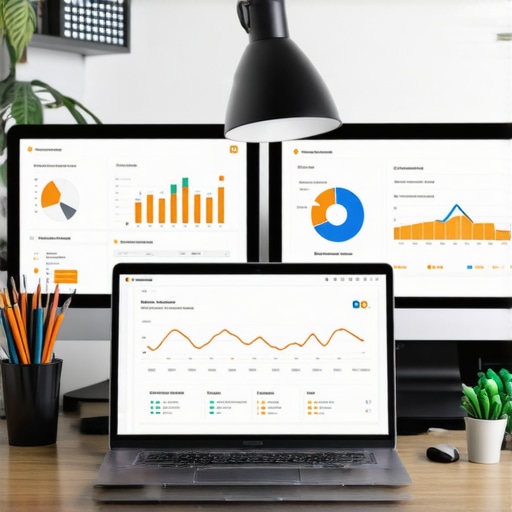
Lessons That Changed My Approach to Maps Rankings
One of the most eye-opening lessons I learned was that small, consistent improvements often outweigh huge, sporadic efforts. I used to think that a single massive tweak would skyrocket my rankings, but I realized that persistent attention to detail—like updating attributes or engaging with reviews—made the real difference. Additionally, I discovered that potential pitfalls, such as neglecting citation consistency, can quietly sabotage your progress, emphasizing that every signal matters. Lastly, I came to understand that off-profile signals, including backlinks from local directories, are just as crucial as on-profile optimizations, revealing the complexity behind local SEO success.
Tools and Resources That Elevated My Strategy
My go-to toolkit includes GBP optimization tools, which automate review monitoring and citation consistency checks, saving valuable time. To analyze backlinks and monitor keyword rank shifts, I rely on platforms like SEMrush and Ahrefs. For strategic reading, these books offered insights that transformed my understanding of local SEO, especially focusing on behavioral signals and content relevance. Focusing on these resources helped me build a robust, resilient approach to sustained growth.
Your Next Step Toward Local Map Domination
The journey to mastering GBP optimization and maps ranking is ongoing, but you’re already equipped with a strong foundation. The real reward comes when you see your efforts translate into consistent leads and visibility—something entirely achievable with intentional, strategic action. Remember, the landscape keeps evolving, so staying curious and adaptable is key. Start small, apply what you’ve learned today, and watch your local SEO success unfold. If you’re eager to accelerate your growth, explore these proven strategies, and keep pushing forward.
Lessons That Changed My Approach to Maps Rankings
- Focus on Consistency: Regularly review and update your profile details to maintain signal strength.
- Look Beyond Your Profile: Off-profile signals like backlinks and citations build your authority subtly but powerfully.
- Behavioral Signals Matter: User engagement, dwell time, and click-throughs influence rankings more than ever.
- Don’t Overlook Small Details: Attributes, photos, and reviews might seem minor but collectively impact visibility.
- Balance On-Page and Off-Page: A holistic approach beats isolated tactics every time. For detailed strategies, visit this deeper dive.
Tools and Resources That Elevated My Strategy
- GBP optimization tools: Automate review tracking and citation audits.
- SEMrush and Ahrefs: Backlink analysis and competitor insights.
- Books on Local SEO: Strategies that emphasize behavioral signals and content relevance.
- Data-driven tactics: Monitor and adapt with confidence.
Your Next Step Toward Local Map Domination
Embrace the journey of continuous improvement. With each tweak and insight, you’re closer to dominating your local maps. Remember, perseverance, combined with strategic resource use, will lead to lasting growth. Dive into new tactics, use the right tools, and watch your visibility and leads expand. The key is taking that first step—your local SEO success is waiting. Curious about how to refine your approach further? Check out these proven strategies to accelerate your journey.

Leave a Reply