
I remember sitting at my desk one afternoon, staring at my Google Maps dashboard with a sinking feeling. Despite pouring hours into my local SEO, my rankings were flatlining. The frustrating part? I was making some classic mistakes—ones I didn’t even realize were sabotaging my efforts. That lightbulb moment hit me hard: I was orchestrating my strategy on the wrong assumptions, and my traffic was paying the price. If you’ve been in that spot, feeling stuck despite your best efforts, you’re not alone.
The Hidden Pitfalls Sabotaging Your Maps Rankings
Over the years, I’ve learned that many local businesses unknowingly fall into traps that hurt their visibility. One oversight early on was ignoring how reviews and engagement influence rankings—failing to optimize for the signals that Google actually cares about. It sounds simple, but missing these are some of the biggest mistakes killing your local traffic in 2026. If you’re tired of watching competitors outrank you, it’s time to get hands-on with the real fixes. Want to discover what I uncovered, and learn how you can avoid the same pitfalls? Keep reading—because the next steps could change everything.
Is Your Strategy Really Worth the Hype?
I admit it—early in my journey, I believed that more keywords and more backlinks would automatically boost my rankings. Turns out, I was wrong. A mistake I made was over-focusing on backlinks while neglecting the Google My Business (GMB) signals that matter most, especially in 2026. External research confirms that local signals like reviews and user interactions significantly influence local pack visibility (source). Correcting this oversight was a game-changer. Do you feel your current tactics neglect these vital factors? I’ve been there, and I’ll show you what works.
Now, let’s dive into the key mistakes that could be holding you back, along with proven solutions to boost your local traffic and outshine competitors in 2026.
Optimize Your Google My Business Profile Effectively
Start by claiming and verifying your GMB listing if you haven’t already. Ensure all information is accurate, consistent, and complete—think of this as setting the foundation of a house. Use the exact business name, address, and phone number across all platforms to avoid confusion that could hinder rankings. Adding comprehensive categories and selecting the most relevant ones signals to Google your true niche, much like pointing a spotlight precisely where it’s needed. Regularly update your hours, services, and ensure your profile remains active to send ongoing signals of legitimacy.
Leverage Customer Interactions to Your Advantage
Customer engagement acts like a traffic signal for Google. Respond promptly to reviews—both positive and negative—to show active management. Encourage satisfied clients to leave genuine reviews, as reviews are a key local ranking factor. Think of reviews as votes of confidence; more high-quality votes boost your credibility. Utilize review response templates to streamline this process but personalize each interaction. Also, monitor your Q&A section and answer common questions to address potential hesitations that might prevent conversions. This kind of active involvement enhances your profile’s relevance and authority.
Refine Visual Content for Better Visibility
High-quality photos and videos significantly influence user behavior and Google’s perception of your listing. upload fresh images regularly—think of it as keeping your storefront appealing. Use the photo tags strategically by including relevant keywords naturally within descriptions; this boosts image relevance in Google Search. Incorporate local landmarks or business-specific visuals to help Google associate your listing with geographic relevance. Remember, the visual assets need to be optimized for clarity and professionalism, which can directly improve your chances of being selected in the coveted local pack.
Tap into Hidden Signals that Drive Rankings
Beyond reviews and visuals, explore less obvious signals such as user interaction metrics. For instance, monitor how visitors engage with your profile—clicks on directions, calls, and website visits—and analyze this data regularly. Applying review sentiment insights allows you to adjust your messaging or service offerings to better match customer expectations, creating a feedback loop that benefits rankings. Additionally, refine your profile’s attributes based on local demand, and focus on frequently searched keywords within your niche to align your profile with evolving search behavior.
Implement Technical Tweaks to Elevate Your Presence
Ensure your business website and GMB profile are interconnected seamlessly. Use consistent NAP (Name, Address, Phone) data and implement schema markup where possible. Conduct regular audits for profile errors or inconsistencies; think of this as tuning an instrument for perfect harmony. Use local map fixes to identify and correct issues that might be blocking your visibility. Also, analyze your search console data for new signals—like emerging keywords or engagement patterns—that you can leverage to optimize your content further.
Focus on Content That Attracts Local Attention
Create hyper-local content that resonates with your community—think articles, guides, or event posts. Use localized keywords naturally within your blog posts, and share stories about your neighborhood or local events to build community authority. Implement local content strategies for consistent growth, and incorporate customer stories or case studies to demonstrate your local expertise. Content that taps into local pride not only garners interaction but also signals relevance to Google.
Review and Adapt Your Strategy Continuously
Finally, treat local SEO as an ongoing process. Regularly track your ranking progress using insight tools and adapt your tactics based on what the data shows. Small tweaks—like adjusting keywords or updating visuals—can have a compounding positive effect over time. Stay updated with the latest algorithm changes and local ranking factors by following trusted resources; these insights always reveal new opportunities for optimization.
When it comes to local SEO and Google Maps rankings, many practitioners fall prey to common myths that can seriously hinder growth. A frequent misconception is that focusing solely on external signals—like backlinks and reviews—is enough. In reality, this overlooks the sophisticated interplay of nuanced signals that Google uses to determine local relevance and authority. Most people miss out on these subtleties, yet mastering them can propel your rankings ahead of competitors.
One prevalent mistake is the assumption that proximity alone dictates local pack visibility. While proximity is significant, recent studies and expert analyses, such as those from industry leaders, reveal that engagement signals, user interaction rates, and review sentiment often weigh just as heavily. Neglecting these factors means your listing might be physically close but still underperforming because it lacks rich, action-driven signals that Google actively monitors.
Are All Reviews Equal, or Is There a Hidden Detail That Counts?
Many believe accumulating a high volume of reviews is the key. However, recent insights show that *review quality* and *sentiment* play a larger role than sheer numbers. Google increasingly assesses review authenticity, emotional tone, and relevance to local queries. A steady flow of positive, contextually relevant reviews signifies trustworthiness to Google’s algorithms, which boosts your rankings. Ignoring review sentiment analysis and response strategies can cause missed opportunities—something I learned the hard way. For more advanced insights on this, check out this detailed guide.
Another trap is overvaluing traditional SEO tactics that work for broad search but have limited impact on local pack dominance. For example, many focus only on keyword stuffing or backlinks without aligning their Google My Business (GMB) profile with the evolving signals Google prioritizes in 2026. A key nuance is that local entity associations, image signals, and engagement metrics are now just as vital. This shift is evidenced in emerging reports from search console data, indicating how interaction velocity—such as clicks, calls, and directions—can catapult a listing ahead when properly optimized.
Finally, beware of the oversimplification that proximity is the chief ranking factor. While proximity is still influential, recent case studies show that optimized signals like entity linking, local content, and real-time user engagement can compensate for greater distances when properly tuned.
In summary, beyond the basics, the real challenge lies in understanding and exploiting these subtle signals that Google uses in 2026. Focusing exclusively on surface-level factors can keep you stuck in the ranks; mastery of nuanced local signals—reviews, engagement metrics, content relevance—will set you apart. Have you ever fallen into this trap? Let me know in the comments.
How Do I Keep My Local SEO and Maps Rankings Stable Over Time?
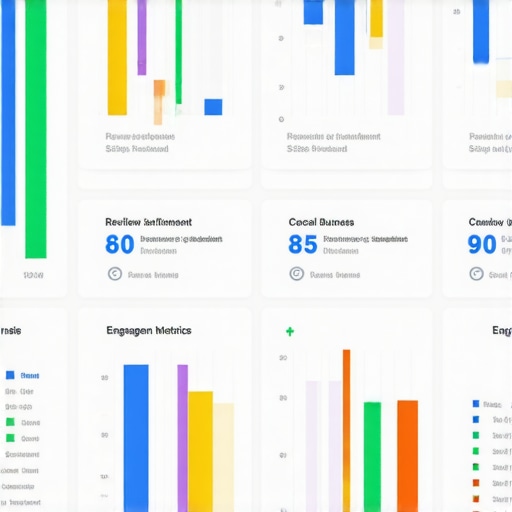
Staying at the top requires more than just initial optimization; it demands a systematic approach using reliable tools and consistent methods. I rely heavily on Google Search Console and Google Analytics to monitor ongoing performance metrics like click-through rates, bounce rates, and user engagement signals. These platforms provide real-time insights into how your profile and website are performing, allowing you to make informed adjustments. Additionally, I incorporate search console data to identify emerging signals that influence rankings, such as new keywords or interaction trends. Regular audits of your NAP consistency and review sentiment help prevent accidental ranking drops. Looking ahead, AI-powered tools like BrightLocal are evolving to automate review tracking and sentiment analysis, promising to simplify long-term management even further. To stay ahead, I recommend setting a monthly schedule to review your analytics, refresh visual content, and respond to new reviews—these actions keep your profile active and authoritative. Implementing these practices positions you to sustain and even increase your local visibility as algorithms evolve.
What Advanced Tactics Should I Use to Future-Proof My Local SEO?
In the coming years, leveraging video content in GBP and optimizing for emerging signals like entity linking will become increasingly vital. Also, adopting local niche clusters—creating content that connects related local areas—can enhance your authority and relevance. I personally utilize tools such as SEMrush for keyword tracking and BrightLocal for direct review management, which together help me identify untapped opportunities and monitor my competitive landscape. As search algorithms grow more sophisticated, integrating structured data (schema markup) ensures your profiles are precisely understood by search engines, guarding against ranking fluctuations. Additionally, I implement regular profile audits to catch issues early. The trend indicates a shift toward more personalized, behavior-focused signals, so I advise testing tools that measure user interaction velocity, like heatmaps or call tracking, to better optimize your profile responses. Committing to these advanced tactics now can safeguard your rankings against future algorithm updates—start by experimenting with embedding schema markup today.
How can I integrate these tools into my routine efficiently?
Automation is key. I set up dashboards in Google Data Studio linked to Search Console and Analytics, providing a centralized view of critical metrics. Scheduled reports alert me to anomalies, so I can act swiftly before rankings decline. For review sentiment analysis, I use Reputation.com to track feedback trends, saving hours of manual monitoring. To streamline local content updates, I rely on content management systems with automated posting features, ensuring consistent activity. Furthermore, I periodically review the interaction signals report to refine my engagement strategy. Integrating these tools into a routine—say, a monthly audit—ensures your local SEO efforts remain resilient amid constant search engine evolution. I highly recommend trying out a comprehensive dashboard setup this week; it’s a game-changer for long-term stability.
The Hardest Lessons I Learned About Maps Ranking, GBP Optimization, SEO Growth
One of the most profound realizations I had was that SEO isn’t just about ticking boxes; it’s about understanding the nuanced signals Google uses in 2026. I once focused solely on backlinks and reviews, expecting rankings to improve naturally. Instead, I discovered that engagement metrics and localized content are equally critical. This pivot transformed my approach, showing that mastery involves decoding Google’s evolving algorithms rather than just following past tactics.
My Essential Toolkit for Dominating Local Search
Tools like Review Sentiment analysis platforms have been game-changers in understanding customer feedback quality. BrightLocal helps me track local engagement signals, ensuring I stay ahead. Finally, Google Search Console remains indispensable for real-time insights. These tools collectively help me adapt swiftly, ensuring my rankings stay resilient amidst the ever-changing landscape.
Your Turn to Take Action
Remember, the future of local SEO hinges on your willingness to embrace these behind-the-scenes signals and tools. No longer can you rely solely on traditional tactics; instead, focus on understanding and leveraging subtle engagement and content cues. The power to elevate your Maps rankings in 2026 is within your reach—start integrating these insights today and see the transformative impact on your business. What’s the one local SEO strategy you’ll prioritize after reading this? Share your plans below—I’d love to hear.

Leave a Reply