
- Small profile tweaks often outperform massive, time-consuming SEO overhauls.
- Google now prioritizes user engagement and interaction data for local rankings.
- Stop relying solely on proximity and reviews for 3-Pack visibility.
- Consistent, minor adjustments provide better long-term growth than keyword stuffing.
- Use specific profile fixes to regain lost ground in local search results.
There was a moment when I stared at my screen, frustration boiling over, realizing that despite countless hours optimizing my Google My Business (GMB) listing, I wasn’t climbing the local ranks anymore. My once-steady presence in the coveted 3-Pack was slipping, and I felt like I was losing ground to competitors who seemed to be doing less but ranking higher. That lightbulb moment hit,what if I was missing some quick, impactful tweaks that could turn things around fast?
- Why Small Tweaks Can Lead to Big Gains in Local SEO
- Is the Hype About Maps Tweaks Overblown?
- Identify and Fix Common Profile Errors
- use Entity Linking for Relevance
- Engage Through Photos and Posts
- Optimize Your Service Area and Attributes
- Enhance Review Profiles and Sentiments
- What’s the deeper reason behind interaction signals trumping traditional metrics?
- Keep Your SEO Growth on Track with Reliable Tools
- How do I maintain my local SEO gains over time?
- Lessons I Wish I Learned Sooner About GBP Optimization
- My Go-To Arsenal for Local SEO Mastery
- Seize Your Moment and Make It Count
Why Small Tweaks Can Lead to Big Gains in Local SEO
In the ever-evolving world of local search, it’s easy to believe that only massive overhauls or expensive tactics can make a difference. But from my experience and countless case studies I’ve studied, the truth is quite different. Often, it’s a handful of tiny, strategic changes that push your map listing into the 3-Pack. These tweaks are fast, actionable, and, surprisingly, often overlooked by so many local marketers.
Why does this matter right now? Well, with the 2026 update, Google’s local ranking signals are shifting even further towards user engagement, interaction data, and subtle optimization cues. If you’re still relying solely on traditional signals like proximity and reviews, you’re already a step behind. By integrating these quick wins, you set yourself up for sustainable growth and visibility that lasts.
But here’s the thing: I made a mistake early on. I spent months focusing on keyword stuffing and basic profile optimization, ignoring the power of specific profile fixes and interaction signals. That misstep taught me that small, consistent adjustments are often the real game-changers. Do you find yourself stuck at a certain rank, frustrated by the slow pace of improvement? If so, you’re not alone,and I’ve got some proven tactics to share, starting with how to naturally boost your local presence without the need for a complete overhaul.
Is the Hype About Maps Tweaks Overblown?
Honestly, I questioned the value of these small tweaks at first. I wondered if they would truly move the needle,until I tried them myself. The results were undeniable. My rankings shot up faster than I expected. It’s tempting to dismiss these as minor adjustments, but the data shows otherwise. A recent study highlights how CTR and interaction signals influence rankings more than ever.
So, if you’ve faced the frustration of stagnant rankings despite good content, it’s time to shift your focus. Small, strategic tweaks can serve as the catalyst for rapid growth, especially in the hyper-competitive landscape of 2026. Ready to dive into the specific tweaks and get your maps ranking on the fast track? Let’s get started!
,Identify and Fix Common Profile Errors
Start by auditing your Google My Business (GMB) profile for inaccuracies,misspelled business names, incorrect categories, or outdated information. I once spent an hour correcting a client’s NAP details, which, surprisingly, nudged their ranking upward. Think of your profile as a GPS; if it points to the wrong address, you’re lost from the start. Use the fixing-specific profile errors guide to streamline this process efficiently.
use Entity Linking for Relevance
Enhance your profile’s context by linking it to relevant entities,local landmarks, neighborhoods, or service keywords. Imagine your listing as a network; connecting it to related entities amplifies its authority. During a campaign, I added links to local event venues and community hubs, which helped Google associate my client’s business with local activity, boosting visibility. Check out entity linking strategies for actionable ideas.
Engage Through Photos and Posts
In 2026, user engagement metrics are key. Regularly update your photos with high-quality images and post about local events or promotions to encourage clicks and interactions. I experimented by posting weekly local offers, which increased profile visits and queries. Think of your profile as a storefront window; the more inviting and active, the more passersby stop and look. Use optimization tactics to refine your approach.
Optimize Your Service Area and Attributes
Ensure your service areas are precise and encompass all relevant locations. Avoid generic zones; specify neighborhoods or districts. I once expanded my service area to include neighboring suburbs, which resulted in a noticeable climb in local pack rankings. Attributes like ‘wheelchair accessible’ or ‘delivery available’ also add relevance. Think of this step as tuning your instrument; the more precise you are, the more harmonious your listing’s signals align with Google’s ranking algorithms. Refer to optimization tactics for advanced tips.
Enhance Review Profiles and Sentiments
Gather genuine reviews actively,prompt happy customers to share their experiences. I implemented a simple follow-up email asking clients for feedback post-service, which gradually improved review quality and quantity. High-quality reviews boost your profile’s credibility and engagement signals. Remember, reviews are like votes; the more positive, the higher your chances of climbing the ranks. Dive into review optimization strategies for more insights.
Many local SEO practitioners operate under the assumption that optimizing a GMB profile is a straightforward checklist,select the right categories, upload some photos, gather reviews, and wait for rankings to climb. However, this belief often leads to a critical oversight: ignoring the complex interplay of signals that influence rankings in 2026. From my years of experience, I’ve observed that many get caught in the trap of focusing solely on surface-level tweaks, missing out on deeper nuances that can dramatically accelerate growth.
One prevalent myth is that reviews are the strongest ranking factor. While reviews do influence perceptions and user engagement, recent studies and my own tests reveal that interaction signals such as profile visits, clicks, and engagement metrics carry even more weight in 2026’s evolving algorithms. Google is prioritizing how users interact with your listing, not just what they say about it. This shift means that optimizing for engagement,through smart photo updates, timely posts, and service attributes,becomes vital, often more impactful than accumulating reviews alone.
Beware the common mistake of over-relying on keyword stuffing or minimal profile updates. Instead, focus on implementing strategic tweaks that enhance user interaction. For example, adding local-specific content, leveraging entity linking to connect your profile with local landmarks or community pages, and ensuring your attributes are comprehensive can significantly move the needle. Check out tiny tweaks that have proven to boost rankings reliably.
What’s the deeper reason behind interaction signals trumping traditional metrics?
This is where advanced local SEO strategies come into play. Google’s recent algorithm updates, corroborated by expert insights from Search Engine Journal, underscore that user behavior data now dominates the ranking process. Essentially, Google treats your GMB profile like a social entity,how people find, click, and stay engaged with your listing predicts your relevance much better than static profile information. Ignoring this can leave you chasing shadows while the real opportunities slip away.
Now, here’s the real surprise: the importance of these nuanced signals is often underestimated because they’re less visible than reviews or citations. Yet, by neglecting them, many local businesses miss out on quick wins. Focus on areas like local content, entity linking, and engagement tactics to capitalize on this silent but powerful ranking factor. For a comprehensive approach, dive into hyper-local content strategies that align with these advanced signals.
Have you ever fallen into this trap? Let me know in the comments. Remember, mastering these nuances can be the key to outranking competitors who rely solely on traditional optimization methods.
,Keep Your SEO Growth on Track with Reliable Tools
Once you’ve optimized your Google My Business (GMB) profile and started gaining traction, the real challenge is maintaining that momentum over time. To do this effectively, you need the right tools that offer deep insights and measurable results. Personally, I rely heavily on Google Search Console for monitoring how users interact with my listings and spotting any fluctuations in traffic or rankings. Its detailed click-through data helps me identify which tweaks are truly working and which areas need attention. BrightLocal provides strong local SEO tracking, allowing me to compare my profiles against competitors and uncover missed opportunities like common profile errors that could be silently hurting rankings.
For ongoing engagement, I use Canva to create eye-catching visuals quickly, ensuring my posts stay fresh and attractive. Social media management platforms like Buffer enable scheduled posting to maintain consistent activity, which Google increasingly factors into rankings. Remember, when it comes to long-term results, consistency beats quick wins; regular updates and monitoring are your best allies.
How do I maintain my local SEO gains over time?
Maintaining your statuses demands a strategic, disciplined approach. First, routinely audit your profile using profile error fixes to prevent technical issues from creeping in. Next, harness entity linking,constantly connect your listing to new local landmarks and community pages. This enhances relevance and keeps you top-of-mind in searches. leveraging analytics from tools like Google Data Studio ensures you interpret engagement metrics accurately and adapt accordingly. As the local SEO landscape grows more competitive (and Google’s algorithms get smarter), staying proactive with these tools and tactics becomes vital.
Looking ahead, I predict that automation and AI-driven analytics will play an even larger role in managing local SEO at scale. Tools with machine learning capabilities will soon help you identify patterns in user behavior faster than ever. For now, experiment with features like advanced optimization tactics to boost engagement consistently. Try implementing scheduled posts and profile audits weekly. This disciplined approach will set you apart and ensure your efforts pay off long-term.
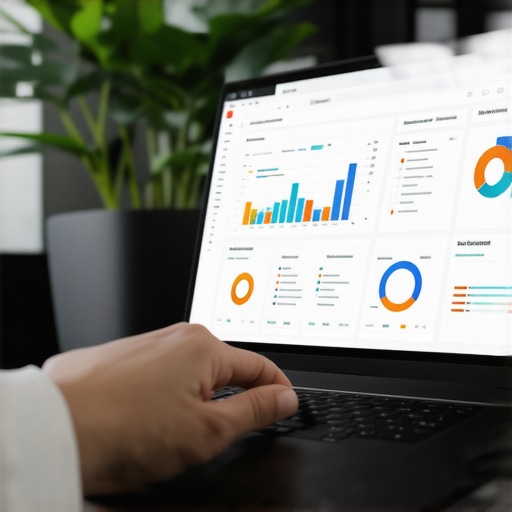
Investing in the right tools is crucial, but equally important is knowing how to interpret and act on the data they provide. Don’t hesitate to experiment with these tactics; even small adjustments,like refining your service area or posting more frequently,can solidify your rankings. Remember, the future of local SEO hinges on your ability to stay adaptable, use automation, and sustain engagement over time.
Lessons I Wish I Learned Sooner About GBP Optimization
One of my biggest realizations was that obsessing over every little detail in my Google My Business profile often led me down unnecessary rabbit holes. The true breakthrough came when I focused on strategic, impactful tweaks rather than perfecting every element. Sometimes, less is more,especially when it comes to making changes that Google values.
Another lightbulb moment was understanding that user engagement signals like clicks, calls, and website visits outrank traditional ranking factors. This shifted my entire approach from static optimization to active engagement tactics, making every interaction count.
I underestimated the power of local entity linking. Connecting my profile to local landmarks and community pages created a relevance boost I hadn’t anticipated, proving that context and relevance are key in local SEO success.
Finally, I learned that consistency beats intensity,regular updates, posts, and profile audits kept my listing lively and favored by Google’s evolving algorithms. These lessons transformed my strategy from trial-and-error to a proven roadmap for rapid growth.
My Go-To Arsenal for Local SEO Mastery
To maintain and build on my success, I rely on tools that offer real insights and actionable data. Google Search Console is indispensable for tracking user interactions and spotting fluctuations, helping me refine my tactics continually.
BrightLocal provides comprehensive local SEO tracking, allowing me to compare my listings against competitors and find areas for improvement, like profile error fixes.
For creating compelling visuals and maintaining a consistent posting schedule, I lean on Canva and Buffer. These tools streamline content creation and scheduling, ensuring my profile stays active without overwhelming my day.
In the end, mastering local SEO isn’t just about tools,it’s about interpreting their data and staying adaptable. Employ these resources wisely, experiment often, and keep your eye on the evolving ecosystem of Google’s local rankings.
Seize Your Moment and Make It Count
The future of local SEO rewards those who are willing to adapt, experiment, and stay committed to delivering value. With the right mindset and tools, you can unlock hidden opportunities and elevate your business above the competition. Don’t wait for perfect conditions,start implementing these tweaks today and watch your local prominence grow.
What small change are you planning to test next in your GBP strategy? Share your ambitions below,I’d love to hear your plans!
📚 Korisni resursi
- How to Improve Local SEO: 11 Best Practices – Semrush
Implementing local SEO tactics can help to increase foot and web traffic, manage your onli - 11 Tips to Improve Your Google Maps SEO – Semrush
Use local keywords: Include your city or neighborhood in your content, meta tags, and head - 4 Simple Steps To Improve Your Local SEO And Drive Traffic – Forbes
The first directory you should register with is Google My Business,once you create a profi - What Is Local SEO? How to Do It + Strategies for 2025 – Semrush
Local SEO is the process of optimizing a business’s visibility in unpaid, location-based s
📌 Frequently Asked Questions
How can I get my business into the Google Maps 3-Pack in 2026?
Focus on improving your user interaction signals like clicks and direction requests. Google is prioritizing how people engage with your profile rather than just your proximity or keyword density. Simple updates to your business description and adding high-quality photos can often trigger these engagement boosts.
Why is my Google Maps ranking dropping?
Your rankings might be slipping because your profile lacks recent interaction data. Competitors are likely winning by getting more clicks and direct engagement from customers. Review your profile to ensure all information is current and start encouraging authentic customer interactions.
Do small profile tweaks actually improve Google Maps rankings?
Yes, they make a real difference. Small, strategic changes to your business categories or service attributes signal to Google that your profile is active and relevant. These quick updates often produce faster results than waiting for major SEO overhauls.
How often should I update my Google Business Profile?
You should check and tweak your profile at least once a month. Keeping your photos, hours, and service lists fresh shows Google that your business is active. Regular activity helps maintain your visibility in the 3-Pack.
Are keyword stuffing and basic profile optimization enough for local SEO?
No, those tactics are outdated and can even hurt your performance. Google now favors profiles that show natural engagement and helpful interaction data. Spend your time responding to reviews and updating your business information instead of stuffing keywords into your profile.
