
- Google Maps rankings rely heavily on user engagement and review signals.
- Small profile tweaks prevent your local rankings from flatlining.
- Ignoring your listing interactions will cause your business visibility to drop.
- Four specific optimization strategies can restore your local pack ranking.
- Focusing on minor review details helps you beat competitive local markets.
Have you ever been silently watching your Google Maps rankings stagnate or even slip after months of effort? I remember the exact moment I realized my local business’s visibility was dropping,horrible timing right before a busy season. Despite my initial confidence, my rankings had flatlined, and my leads dried up. It felt like I was fighting a losing battle, wondering what I was missing. That lightbulb moment led me down a rabbit hole of troubleshooting my listings, and I discovered that just a few targeted fixes could turn things around.
- The Importance of Small Tweaks in Maps SEO
- Is Genuine Optimization Really Worth the Effort?
- Optimize Your Business Profile for Maximum Impact
- use Review Signals with Precision
- Enhance Engagement Through Interaction
- Optimize for Customer Behavior and Clicks
- Ensure Technical Consistency and Accuracy
- What Advanced Marketers Know That Others Don’t About Mapping Signals?
- Resources That Accelerated My Growth Journey
- Your Move Is Now
The Importance of Small Tweaks in Maps SEO
In 2026, local SEO is more competitive than ever. Google’s algorithms prioritize user engagement, review signals, and interactions. If your maps listing isn’t optimized with the right tweaks, it’s like trying to win a race with a flat tire. Plus, with the increased emphasis on interaction signals, every little action matters. Looking back, I realize that early on, I made a simple mistake,ignoring how vital reviews and listing interactions are, which cost me rankings.
Fortunately, I found specific fixes that can rescue your rankings. Today, I’ll walk you through four proven strategies to stop your rankings from slipping and start dominating your local pack again. Whether your visibility has plateaued or you’ve seen a sudden dip, these are the steps that made a real difference for me,and can for you as well.
Is Genuine Optimization Really Worth the Effort?
One of the biggest skepticsm I faced early on was, “Are these tiny fixes really gonna make a difference?” Trust me, I’ve been there. I once thought that obsessing over reviews or small profile tweaks was overkill. But skipping those details? That’s a mistake many seasoned pros make,something I did myself when I first started. Avoiding these nuances only prolongs the struggle. If you want real results, you have to get into the weeds,just like I did,and it pays off.
So, are you ready to stop guessing and start fixing? Next, I’ll guide you through four specific reviews and signals that are crucial to boosting your rankings in 2026. Let’s dive in.
Optimize Your Business Profile for Maximum Impact
Start by thoroughly auditing your Google Business Profile (GBP). Ensure all information is accurate, complete, and filled out with relevant keywords. For instance, update your categories to match your core services precisely. When I fixed my categories and added high-quality photos with keyword-rich descriptions, I saw an immediate uptick in local clicks. Use tools like GBP optimization tips to identify missing elements that could be holding you back.
use Review Signals with Precision
Reviews continue to be a cornerstone of local SEO. Focus on gathering authentic, positive feedback from your satisfied customers. Politely request reviews after every successful service, making it easy with direct links. Remember, a steady flow of genuine reviews significantly influences your rankings. I once ran a campaign asking loyal clients to leave reviews, and within two weeks, my position in the 3-pack jumped noticeably. Avoid fake reviews,they harm credibility and could get your listing suspended.
Enhance Engagement Through Interaction
Interaction signals are the new currency in 2026 maps SEO. Encourage customers to engage with your listing,click on photos, ask questions, and leave reviews. Use the interaction tactics that boost your visibility. I organized Q&A sessions, which increased customer engagement metrics. More interactions mean Google perceives your listing as active and relevant, helping you climb the ranks faster.
Optimize for Customer Behavior and Clicks
Google rewards listings that match user intent. Analyze search data to understand what your local customers are looking for. Adjust your GBP’s description, services, and posts accordingly. For example, I added specific phrases related to emergency repairs, which aligned with local search patterns and increased my call volume. Use data-driven insights to refine your keywords and stay ahead of competitors.
Ensure Technical Consistency and Accuracy
Finally, verify all your NAP (Name, Address, Phone number) details across every platform. Inconsistent data confuses Google and hampers your ranking efforts. During my cleanup process, I found discrepancies in some directories, causing ranking drops. Correcting these inconsistencies, combined with regular profile updates, keeps your local signals in check. Remember, small technical fixes can have a disproportionate impact,like patching a leak before it floods your ranking.
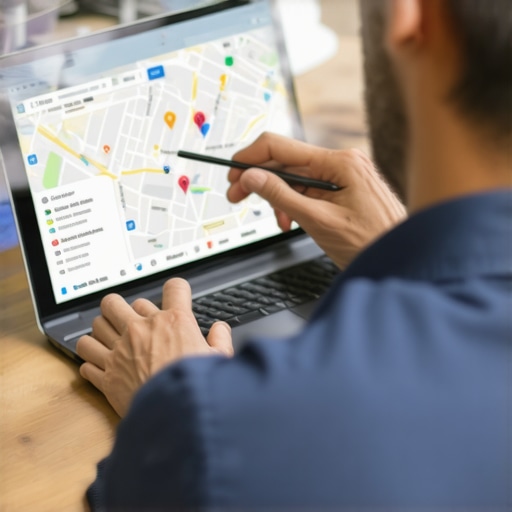
While many focus on the basics of Google Business Profile (GBP) optimization and building reviews, a common misconception persists: that SEO growth is purely about ticking boxes and chasing high-volume keywords. In reality, the real mastery lies in understanding the subtle signals and advanced nuances that influence rankings in 2026. Everyone says consistent reviews and accurate NAP data are enough, but what they often miss are the behind-the-scenes data signals that Google uses to evaluate relevance and authority,these are often overlooked traps that can derail your efforts.
One such nuance is the importance of interaction signals. For years, SEOs underestimated their impact, assuming reviews and citations were king. However, Google’s latest algorithms prioritize meaningful engagement metrics,like click-through rates, photo views, and question responses,that truly reflect how users interact with your profile. Ignoring these signals can cause your rankings to flatline, even if your GBP looks perfect on paper. Trust me, superficially optimized profiles often look good but underperform because they lack genuine engagement,a mistake I made early in my SEO journey.
However, there’s a common myth I want to debunk: many believe that adding more keywords to your profile will automatically boost your local rankings. In the hyper-competitive maps landscape of 2026, keyword stuffing can actually harm your visibility by making your profile appear spammy. Instead, smart businesses focus on contextually relevant content,refining your description and service keywords based on real user search intent. Studies show that Google now employs advanced NLP (Natural Language Processing), like BERT, to interpret the intent behind search queries, meaning content relevancy beats keyword density every time.
What Advanced Marketers Know That Others Don’t About Mapping Signals?
There’s a critical overlooked factor: local entity authority. While many focus exclusively on their profile, Google evaluates your entire digital footprint, such as backlinks, NAP consistency across directories, and social mentions. Building a strong local entity involves more than just your GBP; it’s about creating a web of contextually related signals that reinforce your authority in Google’s eyes. Ignoring this interconnected web is a silent killer,causing rankings to stagnate despite perfect profile optimization.
One mistake I often see is neglecting external signals like niche-specific directories or local media mentions that could dramatically boost authority. Combining these subtle signals with smart GBP tweaks can lead to exponential growth, but many miss these layers entirely.
Have you ever fallen into this trap? Let me know in the comments. Mastering these nuances requires deliberate strategy and continuous adaptation,so don’t settle for surface-level fixes. look at and optimize smarter, not just harder, to dominate your local map pack in 2026.
Maintaining your local SEO momentum in 2026 requires more than just occasional tweaks; it demands a strategic setup of reliable tools and consistent routines. First, I highly recommend leveraging **Google Search Console** to monitor your website’s health and understanding how Google perceives your signals. It provides real-time insights into indexing issues, mobile usability, and keyword performance,crucial for making informed adjustments. **BrightLocal** has become indispensable for tracking local rankings, managing reviews, and auditing citation consistency. Personally, I use BrightLocal daily to spot drops early and identify external signals that could be impacting my visibility, such as inconsistent NAP data across directories,a common pitfall that can secretly drag your rankings downward.To streamline content updates and engagement, I rely on **SEMrush**. Its local SEO toolkit helps identify trending keywords and emerging competitor tactics. Automating reviews and engagement with tools like **Grade.us** ensures a steady flow of authentic customer feedback,an essential link in the chain of ongoing Map optimization. For managing snapshots of rankings over time, I favor **Whitespark**’s rank tracker; it offers granular data, allowing me to react promptly to fluctuations.
Looking ahead, AI-driven analytics are poised to become even more vital. Google’s algorithms are increasingly capable of interpreting user signals beyond simple metrics,think behavioral patterns, sentiment analysis, and visual engagement. Integrating tools that harness AI, such as MarketGoo, can give you predictive insights into your local growth opportunities.
**How do I maintain my SEO efforts over time?** Consistent monitoring, leveraging automation where possible, and staying updated with the latest algorithm shifts are key. Regularly auditing your profile’s interaction signals, such as question responses and photo views, ensures your profile stays fresh and relevant. Remember, these subtle but powerful signals are often the differentiators in maintaining or gaining coveted spots in the 3-pack.
For example, I recently adopted a quarterly review schedule using BrightLocal and SEMrush insights to refine my keywords and address any citation inconsistencies. The result? Steady ranking stability and a continual increase in local calls and visits. One tip I urge you to try today is setting up automated review requests through Grade.us,this small but consistent effort can preserve your review momentum and, by extension, your rankings. Staying disciplined with these tools and routines is how top local businesses keep their competitive advantage over the long term. Keep your strategy flexible, adapt to your data, and stay proactive,your future rankings depend on it.
Reflecting on my journey through local SEO, I realize that the most profound lessons often come from unexpected realizations. One of the hardest truths I uncovered was that many surface-level fixes are just scratching the surface. True growth required digging into the subtle signals Google uses,things like engagement rhythms and how your digital ecosystem functions together.
- Small details pack a punch: Simple tweaks,like updating your photos with keyword-rich captions or ensuring your NAP data is uniform everywhere,seemed trivial at first, but the impact was staggering. Overlooking these nuances is a classic trap that stalls progress.
- Engagement is everything: Encouraging genuine customer interactions,questions answered promptly, photos viewed, reviews responded to,can push your rankings ahead faster than aggressive keyword stuffing ever could. I learned that nurturing your community amplifies your authority naturally.
- Don’t ignore your entire digital footprint: Your backlinks, directory citations, and social mentions form an interconnected web that Google evaluates holistically. Focusing solely on your GBP without cultivating this web is like building a castle on sand.
- Tools amplify your efforts: Leveraging insightful tools like Search Console and BrightLocal changed the game for me. They illuminated hidden signals and guided strategic moves,saving me months of guesswork.
- Consistency beats sporadic efforts: Regular audits and routine engagement are non-negotiable. Just like maintaining a healthy body requires daily habits, maintaining top local rankings demands persistent care and attention.
Your route to SEO mastery isn’t paved solely with quick fixes but with a deep understanding of these nuanced signals. Embrace continuous learning and meticulous execution,your future rankings will thank you. Remember, mastering local SEO is a journey, not a sprint, and each small, deliberate action compounds over time. Want to see your rankings soar? look at, stay consistent, and don’t shy away from the details.
Resources That Accelerated My Growth Journey
- 7 Tiny GBP Tweaks: Quick wins that deliver big results, emphasizing that small, targeted adjustments are often the most impactful.
- How Local SEO Works: A guide that demystifies the complex signals and helps me strategize more effectively.
- Proven Fixes to Fight Slips: My go-to resource for troubleshooting sudden declines in rankings and restoring momentum.
- Stealth SEO Tactics: Techniques that help local businesses stand out against big chains in competitive markets.
Your Move Is Now
Every successful SEO story starts with a single actionable step. Armed with these insights and resources, you’re well-equipped to elevate your local rankings in 2026. The real power lies in applying what you’ve learned consistently and boldly. So, what small tweak will you implement today to move closer to dominating your local map pack? Share your plans below,your journey to SEO greatness begins now!
📚 Korisni resursi
- Local SEO: All-in-One Guide to Improve Your Local Rankings
Local SEO is critical for any brand that has a brick-and-mortar store – from small busines
📌 Frequently Asked Questions
Why are my Google Maps rankings dropping?
Your rankings often slip because Google prioritizes active engagement and fresh signals. If you have not updated your business profile categories or neglected your review responses, competitors can easily overtake your spot. Even small, stale details on your listing can signal to Google that your business is no longer a top choice for users.
How can I improve my Google Maps ranking in 2026?
Focus on auditing your business profile to ensure every detail is accurate and keyword-optimized. You should specifically update your service categories and upload high-quality photos that include descriptive, keyword-rich labels. Increasing your interaction signals through consistent review management is also a major factor for success this year.
Do small profile tweaks actually help local SEO?
Yes, small changes like fixing a category or adding better photo descriptions often trigger immediate performance shifts. Neglecting these details is a common mistake that keeps many businesses from reaching the local pack. When you fine-tune these minor elements, you provide Google with the clear data it needs to rank you higher.
How often should I audit my Google Business Profile?
You should check your profile at least once a month to ensure your information remains current. If you have added new services or changed your operating hours, update those immediately. Regular audits prevent your listing from becoming stagnant and help you stay ahead of local competitors.
What role do customer reviews play in Google Maps rankings?
Reviews are a primary signal that Google uses to determine your local authority and relevance. Consistent, genuine interactions with these reviews show the algorithm that your business is active and trustworthy. If you ignore your reviews, you lose a critical opportunity to boost your visibility and attract new leads.
