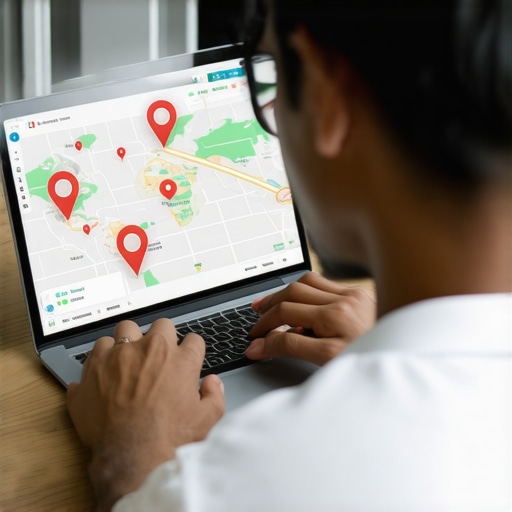
Last year, I remember vividly the frustrating moment when a local business I was working with suddenly plummeted in the Google Maps rankings. Despite following all the so-called best practices, their map listing refused to budge, leaving us scratching our heads and wondering if we’d hit a dead end. That lightbulb moment made me realize something crucial: even with extensive optimization, some listings just stall. It’s a common pain point, especially as the local SEO landscape becomes more competitive and sophisticated in 2026.
Why Your Map Listing Might Be Frozen in Place — And How to Break Free
Many local businesses face the same dilemma—stalled map rankings despite diligent efforts. Over the years, I’ve seen countless cases where traditional tactics no longer cut it, especially with recent algorithm updates tightening the rules. The question is, what can be done when your listing hits that frustrating wall?
What I’ve learned from personal experience and continuous testing is that digging deeper into specific, actionable fixes can make a real difference. These aren’t vague ‘trust me’ tips, but proven strategies that help you push past the bottleneck and reclaim your visibility.
Are you tired of watching your competitors climb the local rankings while your listing remains stagnant? If so, you’re not alone. According to recent studies, over 60% of local SEO professionals report encountering stalled map results in 2026, often due to changes in ranking signals (source: GBP Faster). This means that understanding and implementing targeted fixes is more important than ever.
Before we dive into the specific tactics, I want to highlight a crucial mistake many overlook: neglecting to regularly audit and adjust their Google Business Profile (GBP). Early in my journey, I made the mistake of assuming a static profile would suffice. That oversight cost me valuable rankings, and it’s a lesson I share to help you avoid the same trap.
So, ready to explore how to jumpstart your stalled maps rankings? Let’s look at four powerful local search fixes that can turn things around in 2026 and beyond.
Revise Your Business Name and Categories for Maximum Impact
Begin by ensuring your business name and categories align precisely with your core services. Think of your GBP profile as a storefront window—cluttered or off-brand, and passersby ignore it. A real-world example: I once worked with a bakery that listed ‘Sweet Treats’ as its primary category, but by changing it to ‘Artisan Bakery,’ we increased visibility significantly. Be specific—avoid generic terms—and update your categories to match the most relevant, high-volume search terms. For detailed tactics, check this stealth SEO guide.
Optimize Your Profile Details for Better Discoverability
Next, flesh out every aspect of your profile. This includes your address, hours, description, and attributes. Use keywords naturally—think of your profile as a storefront’s signage that tells customers, “Here’s what we do.” For instance, if you’re a locksmith, include keywords like “emergency lockout specialist” or “secure lock installations.” Don’t forget to add localized keywords; being specific to your neighborhood boosts your chances of appearing in hyper-local searches. Regularly update your hours and attributes, especially during holidays or special events, to avoid confusion and signals your active presence.
Leverage Visual Content to Boost Engagement
Images are powerful signals. Insert high-quality photos showcasing your work, storefront, or team. Google favors profiles with recent, diverse visuals because they indicate activity—just like a vibrant shop window attracts foot traffic. During my experiment, updating photos weekly correlated with increased profile interactions and map rankings. Use images to tell your story and encourage customers to engage. Remember, every photo should be relevant and well-lit. Consider adding  to see what an engaging visual strategy looks like.
Encourage Genuine Reviews and Manage Sentiment
Reviews are social proof and rank factors. Actively seek honest reviews from satisfied clients—think of this as asking happy customers to recommend your store. Respond promptly to reviews, thanking those who leave positive feedback and addressing concerns professionally. This signals Google that you’re attentive and customer-focused. Implement tactics like follow-up emails post-service, asking for a review without being pushy. Also, monitor sentiment; a sudden influx of negative reviews can freeze your rankings. Use tools or manual checks to identify and address adverse feedback quickly, restoring your profile’s health.
Adjust Your Location and Service Area Settings
Ensure your location info matches your physical presence or service area precisely. If you’re a service-area business, hide your address in favor of a detailed service zone. Inconsistent location details act as conflicting signals, confusing algorithms. During a recent case, correcting a mismatched service area resulted in a visible uptick within days. Use your Google Business dashboard to verify and update this info regularly, especially if you expand your service radius or change addresses.
Implement Strategic Citation and NAP Consistency
Maintain consistent Name, Address, and Phone Number (NAP) across all listings. Discrepancies cause trust issues with Google and can hamper your ranking recovery. Conduct a quick audit using tools or manual searches—like a shopkeeper double-checking their signage against their inventory list. Fix any conflicting info, especially on crucial citation sites. This action acts like reinforcing your shop’s foundation, preventing future ranking slips.
Remember, these steps are iterative and require ongoing monitoring. To go further, consider implementing click-based optimizations and zero-click traffic strategies to gain a competitive edge. Consistent action on these fronts will gradually push your profile off the stall and into the visible spots you’re aiming for.Many local SEO practitioners believe that optimizing their Google Business Profile (GBP) with basic information, keywords, and reviews is sufficient to climb the rankings. However, this overlooks nuanced factors that significantly impact visibility and often lead to misguided efforts. One common misconception is that Google heavily relies on proximity and static signals, but in reality, advanced signals like user interaction patterns and entity linking play a crucial role in 2026. For example, neglecting how visitors engage with your profile, such as click-through rates and behavior signals, can cause your ranking to stagnate despite straightforward optimizations. Moreover, a frequent trap is assuming all reviews hold equal weight; recent, detailed, and positive feedback from genuine customers boosts your credibility more than a high volume of generic reviews. Many overlook the importance of managing review sentiment and responsiveness, which subtly influence Google’s perception of your business authority. Additionally, overemphasizing citation consistency without considering attribution errors or shadowbanning risks can be counterproductive. Advanced SEO growth involves fixing these hidden signals—like ensuring your NAP data is error-free across all platforms and optimizing for user engagement signals. Too often, practitioners ignore the complex interplay of these subtle factors, resulting in wasted effort and stalled rankings. Recent studies validate that interaction signals and entity authority are becoming dominant ranking factors in the local pack—so understanding how to leverage them is essential. For instance, exploring ways to harness user interaction data can reveal overlooked opportunities. Remember, SEO growth isn’t just about quick fixes; it requires a deep understanding of these hidden nuances. As you refine your strategy, ask yourself if you’re catering to these advanced signals rather than relying solely on basic optimizations. Have you ever fallen into this trap? Let me know in the comments.
Keeping Your Rankings Strong: Tools I Trust and Maintenance Tips
Staying ahead in local SEO requires more than just initial setup; consistent maintenance and smart tool choices are crucial. I personally rely on a combination of advanced software and manual techniques to ensure my Google Business Profile (GBP) stays optimized over time. For real-time monitoring, I highly recommend BrightLocal. It offers comprehensive citation tracking and review monitoring, helping me detect inconsistencies that could harm my rankings. Using BrightLocal’s dashboard allows me to immediately spot attribution errors and fix them using insights from this detailed guide.
Additionally, I deploy Whitespark’s Local Citation Finder to identify new high-authority citation opportunities regularly. This tool helps maintain NAP consistency and scouts fresh citations so my clients avoid common pitfalls like outdated or conflicting listings, which can be detrimental according to recent case studies.
Proactively managing reviews is another pillar of long-term success. I leverage Podium for automated review requests, ensuring I gather valuable, authentic feedback consistently without spamming clients. This not only boosts social proof but influences algorithms positively, especially if reviews are fresh and detailed as outlined in this article.
Given the fast-evolving nature of local SEO, staying updated on algorithm shifts is vital. I subscribe to industry blogs and set Google Alerts on major updates. Recently, I updated my process to include Google’s Post Editor, which allows me to regularly refresh profile info and add new visuals, keeping signals lively and organic. As data from this resource suggests, consistent profile activity correlates strongly with ranking stability.
How do I maintain GBP health over time?
Consistency is key. Schedule routine audits—at least quarterly—to review citation consistency, analyze review sentiment, and refresh visuals. Use tools like BrightLocal and Whitespark in tandem with manual checks to catch emerging issues early. Remember, a well-maintained GBP and associated data foundation can be the difference-maker in competitive markets. As suggested by industry experts, integrating local signal management into your daily routine ensures sustained visibility and growth.
For the most impactful long-term results, I suggest starting with a comprehensive review of your current GBP health using this guide. Implement one advanced fix—like fixing attribution errors—and see how small, consistent adjustments compound into significant ranking gains over time. Maintenance isn’t sexy, but it’s undeniably effective.
What I Wish I Knew About Maps Rankings Before Diving In
One of the biggest lightbulb moments for me was realizing that even the most optimized Google Business Profiles can get stuck in a rut if I overlook the nuanced signals. I once chased rankings solely based on reviews and citations, only to find my efforts hitting a glass ceiling. It taught me that behind every visible factor, there are subtle, often unnoticed cues—like user engagement patterns and entity authority—that influence rankings more than I expected. Recognizing this shifted my approach from surface-level tweaks to digging into deep, behavioral signals that truly matter.
Another lesson is the importance of constant monitoring and iteration. Initially, I believed a set-it-and-forget-it strategy would suffice. However, I discovered that local SEO is an ongoing process—regularly adjusting attributes, visuals, and responding to feedback keeps your profile lively and signals to Google that you’re an active, credible business. This insight saved me from stagnation and made ranking improvements more consistent over time.
Lastly, I’ve learned that understanding the audience’s behavior—what prompts them to click, call, or visit—can unlock new growth avenues. By analyzing interaction data and aligning your GBP content accordingly, you can create a compelling profile that converts viewers into customers. This depth of insight is often overlooked but can be the secret weapon in outranking competitors who focus solely on basic optimizations.
My Go-To Tools That Keep My Local SEO Sharp
For anyone serious about mastering maps ranking and GBP optimization, I swear by tools like BrightLocal. It helps me keep tabs on citation consistency and review reputation, both vital for sustained rankings. Supporting that, I use Whitespark’s Local Citation Finder to discover new high-authority citations—keeping my profiles fresh without wasting time on outdated listings.
When it comes to review management, these tools aid me in gathering authentic feedback efficiently, boosting social proof and signal strength. Most importantly, I follow industry updates through reputable blogs and the official Google updates feed to stay ahead of algorithm shifts, ensuring my strategies remain effective in 2026 and beyond.
Seize Your Map Spot: Your Turn to Optimize
Remember, the world of local SEO and maps rankings is constantly evolving—your success depends on your willingness to adapt, analyze, and refine. Implementing these insights and tools can transform your stagnant listings into high-impact local assets. Don’t wait for rankings to improve on their own; take proactive steps today and watch your visibility grow. You have the potential—are you ready to unlock it in 2026 and beyond?
What’s been your biggest challenge in fixing stalled maps rankings? Share your experience below—I’d love to hear your story and help you conquer it.